Fostering Agency: Building Confidence to Reduce the Impact of Chronic Pain in Young People
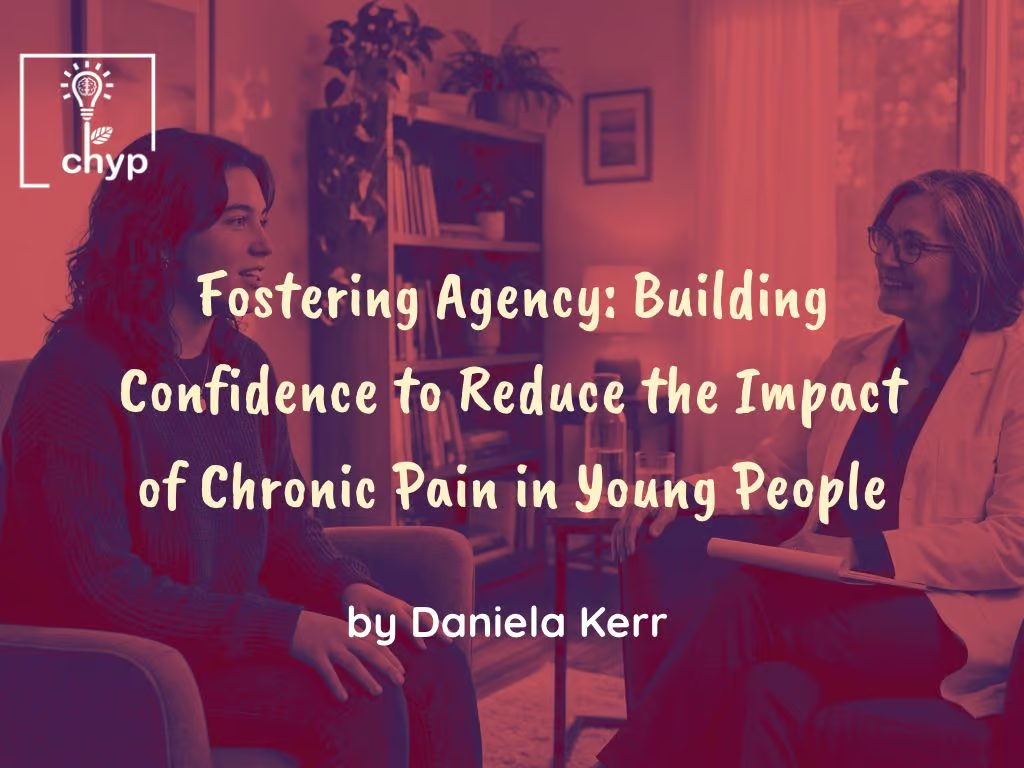
At school, your child and their peers are treated as “adults in training.” They are supported in learning, growing, and preparing to make their own decisions. But in healthcare settings, youth with chronic pain often feel undervalued, misunderstood, and easily dismissed.
Adults are talking about their bodies, their symptoms, and their futures. Well-intentioned caregivers may answer questions for them. Clinicians may speak primarily to the adults in the room. The youth in pain can often feel like the least significant person in conversations about their own health.
This loss of agency is challenging for a young person who already faces unpredictable symptoms and a different lifestyle than their peers. Your task as a caregiver becomes finding ways to foster agency without overstepping or pressuring your child.
Fostering agency directly impacts chronic pain.
It is scary and overwhelming for a young person to feel helpless or unable to influence what happens to them. This experience directly impacts the nervous system—the source of chronic pain. The nervous system is constantly taking in information about the body and its surroundings—including fear and uncertainty—and it uses that information to determine how much protection, or activation, is needed. Symptom flare-ups often arise from nervous system threat activation.
But developing a sense of agency and self-efficacy sends safety signals to the nervous system, which reduces this threat activation and flare-up response. This is a subtle, yet powerful way the nervous system responds to the outside world. And as caregivers, you can help make this shift.
Agency does not mean doing everything alone.
The goal is not to suddenly hand over more responsibility. That can feel just as overwhelming as having no control at all. Agency develops gradually, and it can look like making small choices, understanding what is happening, participating in conversations, learning skills, solving problems, and gradually taking ownership of responsibilities that are appropriate for the young person’s age and abilities.
So, how can you foster agency without making things overwhelming?
1. Look for moments when you can give choices.
Examples:
- “Would you rather talk to the doctor first, or would you like me to start?”
- “Do you want to rest alone or together?”
2. Let them be the expert on their own experience.
Your child is the person experiencing the pain. Ask questions before jumping in with answers.
Examples:
- “What have you noticed?”
- “What do you think might help?”
- “What do you want your doctor to know?”
You don’t have to agree with every response. Listening is not the same as agreeing, but it gives your child an opportunity to develop confidence in observing and communicating about their own experience.
3. Encourage participation in healthcare conversations.
Speak with your child rather than about your child.
Examples:
Before appointments:
- “What are the top things you want to talk about?”
- “Is there anything you want me to bring up if you forget?”
During appointments:
- First, give them space to answer questions themselves.
- Only step in to help if they need it or ask for it.
4. Involve them in problem-solving around flare-ups.
Examples:
- “How can I support you?”
- “What do you think your body needs right now?”
5. Notice effort and problem-solving—not just symptoms.
Examples:
- “You spoke really well at the appointment today.”
- “I recognized that you took a break before things got worse. Good job.”
Agency helps a youth in pain experience themselves as an active participant in their life, rather than a passive recipient of illness and care. They don’t have to be passengers in their pain journey—they can become the driver.
There will be days when your child needs more help. There will be flare-ups during which responsibilities will have to be adjusted. There will be appointments when you will need to speak up more. And there will be moments when your child will simply be too exhausted, overwhelmed, or uncomfortable to make another decision.
Ultimately, youth in pain should be shown through actions that their voices matter, they have choices, and they are becoming skilled in navigating their lives.