Getting the Blueprint of Your Child: A Summer ‘True Temperature Check’

Summer has a funny way of revealing what the school year hides.
The rushed mornings soften. The schedules loosen. Children who have been “holding it together” suddenly melt down over popsicles, refuse camp, sleep until noon, or cling to parents in ways that seem confusing.
Parents often tell me, “I thought summer was supposed to help.”
But summer is actually one of the best times to pause and ask:
What is my child’s true temperature?
- Not the temperature on a thermometer.
- Not grades.
- Not behavior charts.
- Not whether they said “fine” when asked how they are doing.
I mean the deeper temperature:
- their mental temperature
- their body temperature
- their soul temperature
In my “True Temperature Check” framework, we look at the whole child—not just symptoms, diagnoses, or behaviors. Their body tells a story long before words do, because children are constantly communicating through:
- movement
- posture
- energy
- tone of voice
- timing
- sensory patterns
- relationship cues
And when we learn their blueprint—their baseline way of being—we can notice shifts before a child reaches burnout, shutdown, pain flares, or emotional collapse.
What Is a Child’s “Blueprint?”
A blueprint is your child’s natural way of moving through the world. Some children naturally move:
- quickly
- slowly
- heavily
- lightly
- cautiously
- expansively
- quietly
- intensely
None of these are wrong.
The Goal is Recognizing the Baseline
The goal is not to “fix” the child. The goal is to understand: Who is this child when they feel safe, connected, and seen?
That becomes the baseline. Once you know the baseline, you can notice temperature shifts with compassion instead of punishment.
For example:
- A naturally chatty child suddenly becomes quiet.
- A child who usually walks upright begins slouching.
- A sensory-seeking child begins to withdraw from touch.
- A child who normally notices everything becomes foggy and disconnected.
Those changes matter. Not because the child is “bad,” but because the child is communicating.
As I often say: “Our bodies constantly communicate with us through emotions, sensations, and movement patterns.”
The Child Nobody Really Saw
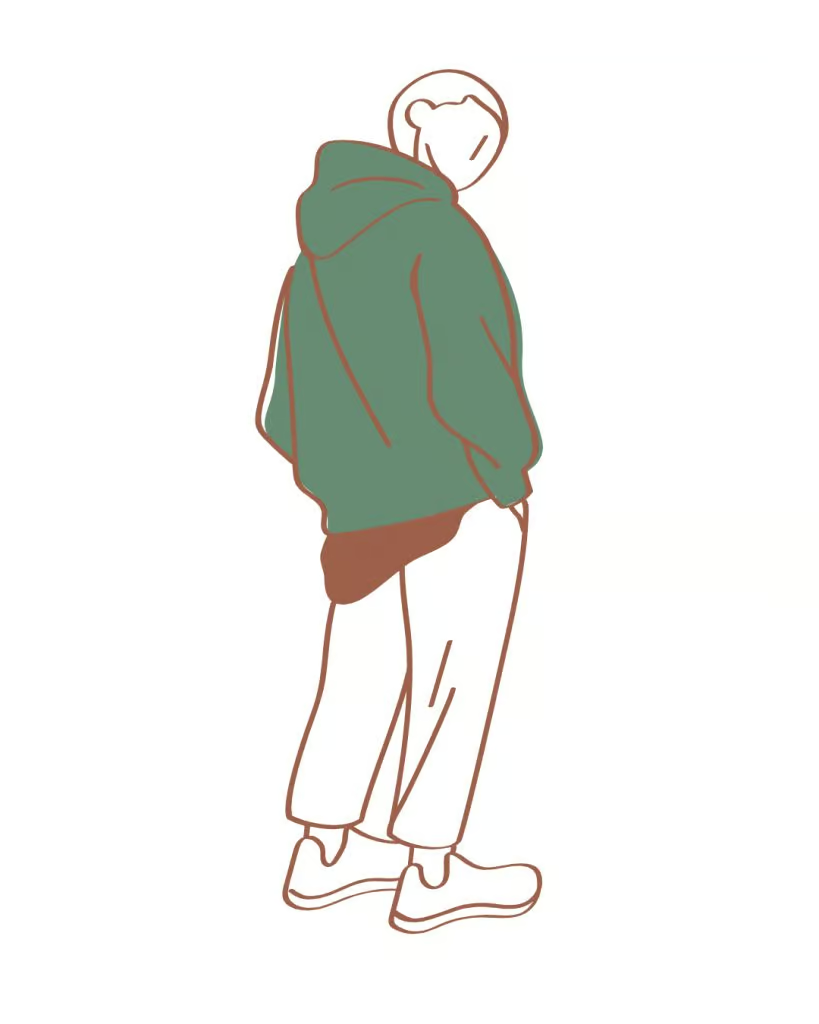
Let me tell you about a child I’ll call Ethan. Ethan walked into school every day with his hood pulled low over his face. No one thought much about it. Teachers described him as:
- “quiet”
- “low motivation”
- “hard to engage”
But when we slowed down and looked at his true temperature, the story changed.
His Mental Temperature
When asked questions, his responses were brief:
“Fine.”
“I don’t know.”
“Whatever.”
Minimal phrasing. Flat tone. Very little initiation. His mind wasn’t loud and explosive. It was cold. Detached. Protective. Withdrawn.
He had quietly developed the belief: “Nobody notices me anyway—it’s familiar this way.”
So why would he speak fully? Why would he raise his hand? Why would he expect a connection if his nervous system had already learned disappointment?
His Body Temperature
Ethan’s body told the story before his words ever did. His shoulders folded inward. His head stayed down. His movements were heavy and slow.
He barely took up space.
When teachers greeted him, he often did not look up. Some assumed disrespect. But his body was actually communicating discomfort and disconnection. Children often say with movement what they cannot yet say with language. And Ethan’s body was saying: “I don’t feel safe enough to be fully here.”
His Soul Temperature
This was the deepest layer. His energy felt depleted. Not dramatic. Not explosive.
Just dimmed. Like a flashlight running out of batteries. He had stopped expecting joy. Stopped expecting people to truly notice him.
And here is the important part: Children do not always look “sad” when they are struggling. Sometimes they look:
- tired
- flat
- disconnected
- irritable
- sensory overwhelmed
- frozen
- checked out
The Shift Happened When Adults Learned Ethan’s Blueprint
Everything changed when the adults around Ethan stopped focusing solely on behavior and began to understand his whole embodied experience. We became curious instead of corrective.
Instead of—
- “Sit up.”
- “Speak clearly.”
- “Participate more.”
—we explored:
- What helps his body feel safer?
- What pace does he naturally move at?
- What sensory input overwhelms him?
- What helps him feel connected?
- What happens to his body when he feels seen?
This is where embodied methodology matters deeply in my clinical work. We are not treating only thoughts. We are supporting—
- mind
- movement
- sensation
- relationship
- timing
- energy
- nervous system awareness
—the whole child.

Using Sensory Superpowers
One of my favorite ways to work with children is helping them discover what I call their sensory superpowers.
Children with chronic pain, anxiety, neurodivergence, or stress are often incredibly perceptive. They notice:
- sounds
- textures
- lighting
- facial expressions
- tone shifts
- movement
- energy changes
But instead of viewing these sensitivities as problems, we help children learn: “Your body is giving you information.”
Just like a bat uses sonar or a bear uses smell for survival, children can learn to understand their sensory systems rather than fear them.
For Ethan, this meant:
- Noticing when noisy hallways overwhelmed him.
- Recognizing that his body moved more slowly under stress.
- Understanding that his shoulders tightened when he felt invisible.
- Learning how movement changed his emotional state.
And slowly, his body began to change.
What Changed Physically?
His posture shifted first. Not because someone demanded it, but because safety gave permission to the body.
He began walking with more balance in his weight:
- not collapsed and heavy, but not floating away, either
- with more ease, more grounding
We also worked on varying his timing and pace. Many children get stuck in one movement pattern:
- always rushed
- always frozen
- always slow
- always hyper-alert
But healthy nervous systems need flexibility, so, we practiced:
- quick and slow movement
- expanding and contracting space
- lightness and groundedness
- movement with rhythm and choice
The goal is not perfection. The goal is adaptability.

The Physical Changes Affected Other Parts of Ethan’s Life
After Ethan’s body language began to shift, other parts of his life slowly started changing too. He became more open to experiencing school instead of simply surviving it.
As he felt safer in his body, he also began forming genuine connections with his teachers, which allowed learning to feel less threatening and more supportive. Small moments mattered—making eye contact more often, speaking in fuller sentences, or staying engaged in class just a little longer than before.
Ethan’s parents also felt more empowered to advocate for him, recognizing when he needed a mental health day, additional emotional support, or educational recommendations that honored his nervous system and learning needs rather than pushing him past his limits.
Families and Teachers Need Temperature Awareness Too
One of the most powerful things parents and teachers can learn is this: A child’s shift in temperature is information—not failure.
If we know a child’s baseline, we can notice early warning signs:
- shorter phrasing
- increased irritability
- slumped posture
- sensory avoidance
- emotional shutdown
- depleted energy
Then we can respond early.
- Not after the explosion.
- Not after the school refusal.
- Not after the pain flare.
Early awareness creates prevention.
Supporting Your Child
Sometimes support sounds like noticing the body movements accurately, not the limiting emotional label:
- “I see heaviness in your shoulders.”
- “I notice your eyes are teary.”
- “Do you need slower timing right now?”
- “Your voice sounds far away today.”
- “What is your temperature right now?”
Children begin learning: “My body makes sense.” That alone is healing.
Summer Is the Perfect Time to Recalibrate
Summer offers something children desperately need: space. Space to notice:
- their pace
- their body
- their sensory needs
- their energy
- their rhythms
This does not require expensive therapy tools. Sometimes it begins with:
- walking barefoot outside
- listening for sounds
- noticing textures
- stretching at different speeds
- dancing in the kitchen
- lying on the floor
- swinging
- rocking
- humming
- slowing down enough to actually observe your child
And maybe, most importantly: greeting them like they matter. Because many children walk through the world believing nobody truly sees them.
But when we learn their blueprint—their real mind, body, and soul temperature—we begin responding to the child underneath the behavior.
That is where connection happens. That is where healing begins.
And that is why the whole child matters so deeply in my clinical work.